About
William R. Brinkley
Author of "The Late Bronze Age Collapse"
About the Book
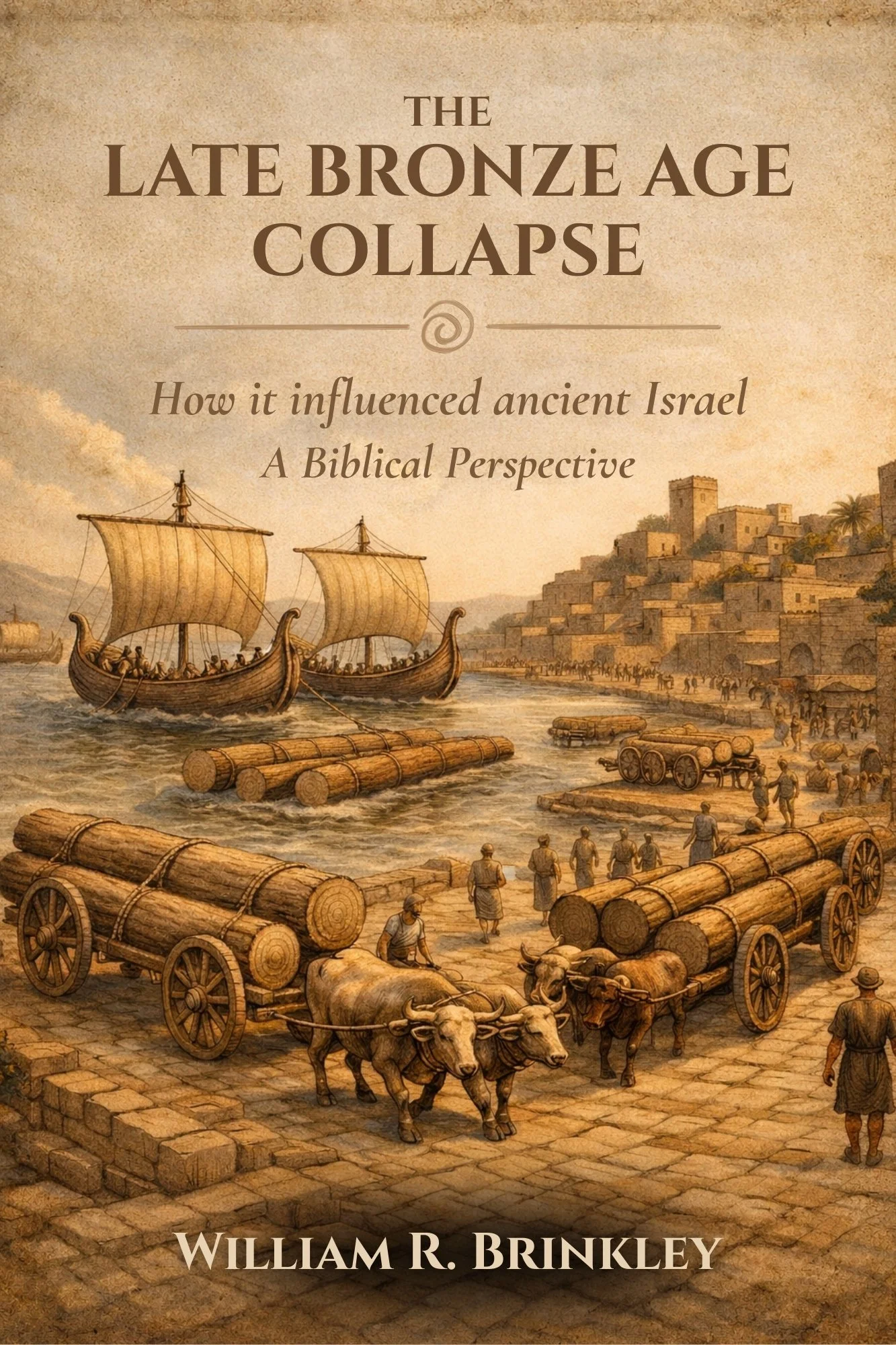
The Late Bronze Age Collapse
The first kings, prophets, and communities of Israel emerged in a world reshaped by upheaval. This book recounts how they forged their identity amid the powerful forces that rose in the aftermath of the Late Bronze Age collapse. More than a theological narrative, it presents a lived historical drama of survival, faith, and divine purpose during one of the most transformative periods in human history.
Drawing on Scripture, archaeology, and the geopolitical realities of the ancient Near East, this work invites readers to step into a world where faith meets history. Discover how a nation found its calling after the collapse of an era—and why its story remains relevant today.
About the author
William R. Brinkley
William R. Brinkley was born and raised on his family’s farm near Shawnee town, Illinois, where hard work and perseverance were part of daily life. Before entering academic study, he worked in the coal fields of Southern Illinois and spent many years driving trucks to support his family. Those years shaped his character, steady, resilient, and grounded in the realities of working people.
At the age of forty‑eight, William began a new chapter. While contracting as an owner-operator truck driver during the day, he attended night classes at the University of the Incarnate Word in San Antonio, Texas. In 2009, he earned his Bachelor’s degree in Business Administration with honors, a milestone that reflected both determination and grace.
After the loss of his daughter, Taundra, who passed away at age thirty‑eight, leaving behind her husband and young son, William and his wife returned to Southern Illinois. Their church soon found itself without a pastor. Though he never felt called to pastoral ministry, William offered to teach, approaching the responsibility with humility and deep reverence for Scripture.
In 2024, he began pursuing a master’s degree in Biblical Studies through Birmingham Theological Seminary in Birmingham, Alabama. The transition into graduate‑level theological work was not easy. His very first class, Academic Writing and Research, proved to be a struggle. During those early weeks, he prayed earnestly, asking for clarity and strength while resisting the temptation to doubt the leading of the Holy Spirit in his life.
It was in that difficult season that something unexpected happened. In the quiet hours of the night, he began receiving vivid thoughts about the ancient world, especially the interactions between the Phoenicians and the kings of Israel, David and Solomon. These moments became a turning point. They taught him how to listen more carefully, how to be obedient, and how to trust the Spirit’s guidance even when the path felt uncertain.
Those midnight insights eventually grew into the research and writing that shaped his work today. They also deepened his conviction that Scripture, history, and faith are woven together in ways that reward patient study and spiritual attentiveness.
William continues to write, study, and serve with the same humility that has marked every stage of his journey. His work reflects a life shaped by labor, loss, learning, and the quiet, persistent leading of the Holy Spirit.